






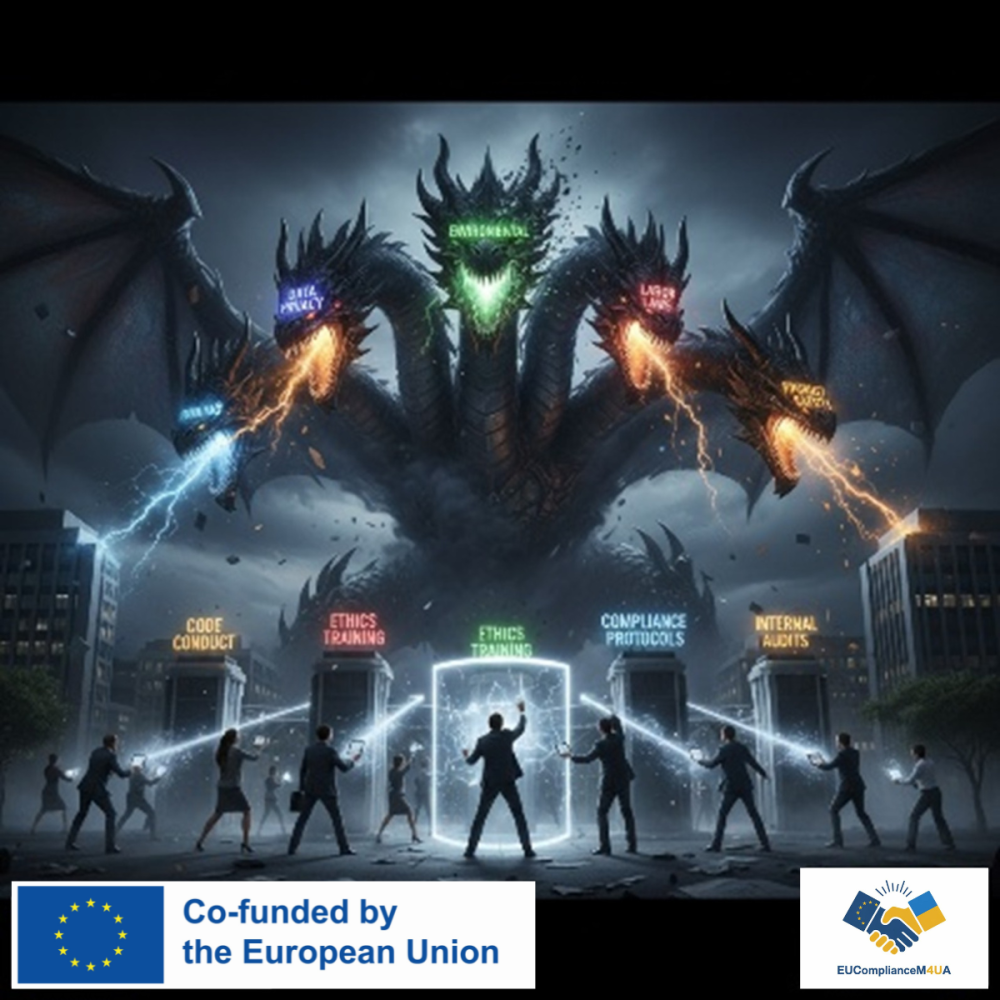
Fighting the Shrew of Non-Compliance: Tiny Contracts with the Devil
When I teach students and managers about non-compliance in procurement, many believe that major compliance breaches stem from a single dramatic decision with disastrous consequences.
However, my experience tells a different story.
The “big case” is almost never one big mistake — it’s an accumulation of small concessions and acts of non-compliance, each seemingly insignificant on its own.
I call these tiny contracts with the devil.
You sell a small piece of your integrity — just this once.
And then another.
And another.
Until one day, you realize there’s no way back.
The stage is set for a major compliance breakdown.
Paradoxically, this happens especially in organizations well-protected by multiple shields — a Code of Conduct, a Procurement Handbook, a Whistleblower Program where the fight against the devil seems won before it even begins. And yet…
If I told you that a business lunch paid by a supplier could lead to a corruption case,
that a paid conference speech might cause a leak of confidential data,
or that informal exchanges during an investigation could undermine an entire compliance program —
you might call me an alarmist or a compliance freak.
But that’s exactly how it works. Non-compliance rarely starts big. It grows silently, step by step.
Explaining this mechanism to students who lack first-hand corporate experience is a real challenge. That’s why, in our Guidebook on compliance management developed under the ComplianceM4UA project, we included several case studies capturing this critical moment of no return — when a series of small compromises turn into a serious violation.
Seems that the devil has learned. He never offers a single big deal. He prefers tiny contracts, one at a time. And only when he is ready …
The creation of this communication has been funded by the European Union. Views and opinions expressed are however those of the authors only and do not necessarily reflect those of the European Union or the European Education and Culture Executive Agency (EACEA). Neither the European Union nor the European Education and Culture Executive Agency (EACEA) can be held responsible for them.